Portcast provides AI-powered supply chain visibility for global logistics teams, combining real-time shipment tracking with predictive analytics to help companies navigate complex international trade routes. Founded in Singapore in 2017, the company has built a platform that processes over 5 million data points daily from 70+ sources, covering 5,000+ vessels across 12,000+ ports worldwide.
The company's mission centers on delivering trustworthy data analytics through proprietary AI technology, enabling shippers to build more resilient supply chains capable of withstanding disruptions. By integrating container tracking, predictive ETAs, port congestion monitoring, and freight spend management into a single platform, Portcast helps logistics teams move from reactive to proactive supply chain management.
Our Review
We've been watching Portcast since they emerged from Singapore's logistics tech scene in 2017, and frankly, we're impressed by how they've tackled one of shipping's biggest headaches: nobody really knows where anything is or when it'll arrive.
The company just closed a $6.5M Series A in November 2024, bringing their total funding to $10.5M. Not massive by Silicon Valley standards, but in the notoriously conservative logistics world, that's solid validation.
The Data Beast Behind the Curtain
What caught our attention is Portcast's data appetite. They're crunching 5 million data points daily from 70+ sources, tracking 5,000+ vessels across 12,000+ ports and 220+ carriers. That's not just impressive scale, it's the kind of comprehensive coverage you need to make AI predictions actually work in logistics.
Most supply chain visibility tools give you basic tracking. Portcast goes deeper with predictive ETAs, port congestion alerts, and root-cause analysis when things go sideways. We appreciate that they're not just telling you your shipment is late, they're explaining why and predicting what happens next.
Smart Positioning in a Crowded Market
The supply chain visibility space is getting crowded, but Portcast has carved out a nice niche. They're not trying to be everything to everyone. Instead, they focus on ocean freight specifically, with coverage across 600+ seaports for congestion tracking.
Their expansion from APAC to Europe shows they understand global trade lanes, not just regional shipping patterns. For manufacturers dealing with Asia-Pacific supply chains, that regional expertise probably matters more than flashy features.
Room to Grow
At 32 employees (according to PitchBook), Portcast is still small enough to be nimble but large enough to have proven their concept. The recent Series A suggests they're ready to scale, which makes sense given how supply chain disruptions have made visibility tools essential rather than nice-to-have.
We'd love to see more details about their AI accuracy rates and customer retention, but for a private company in logistics tech, they're hitting the right notes: real data scale, focused use cases, and steady growth without overhyping the AI angle.
Features
FAQs
Ploy was founded in 2024.
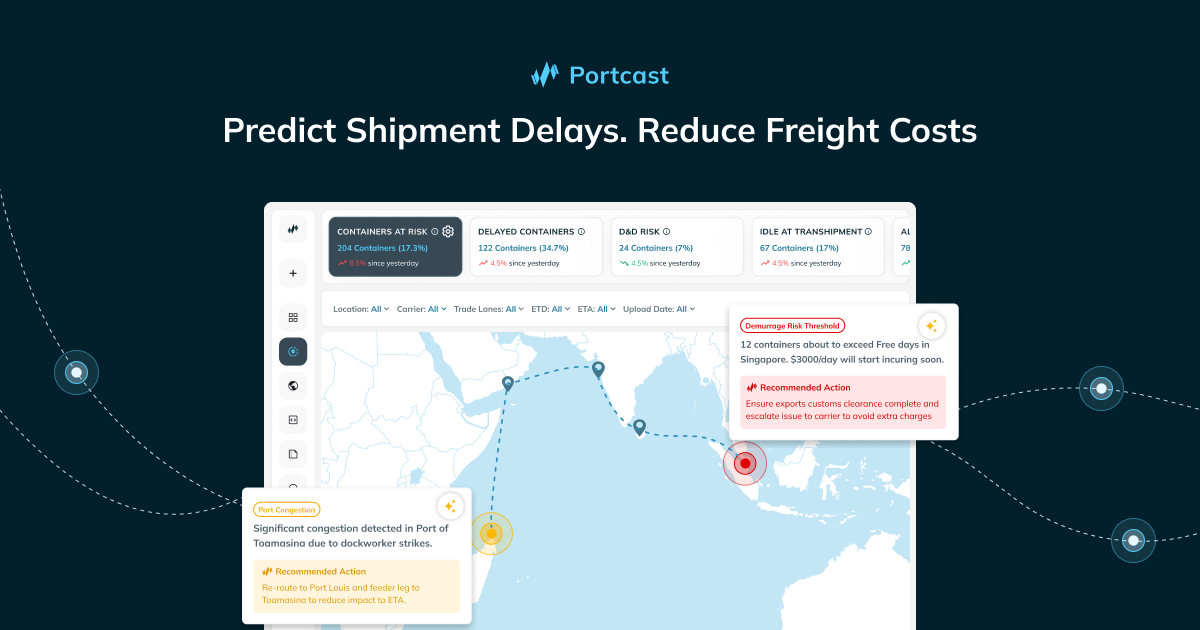

Portcast is a predictive supply chain visibility platform that helps manufacturers and logistics providers reduce delays, control costs, and manage disruptions before they escalate. Key features include real-time tracking for containers, vessels, and air cargo, visibility into port and terminal events, carrier updates, shipping performance insights, emissions reporting, and automated freight audits powered by AI. Using a global data network and proprietary machine learning, Portcast delivers accurate ETA and ETD predictions, identifies the root causes of delays, and sends proactive alerts through dashboard or API. This enables teams to act early, handle exceptions effectively, and move toward a more touchless supply chain.

Zixflow

Prime Intellect


Personetics

CodeSignal

SalesPatriot


Outlier AI